Stacie Vos
First Drafts
As the enclosed writer-in-residence this summer, I began a project I had only started by mistake while writing in my notebook on a plane from London: my first novel.
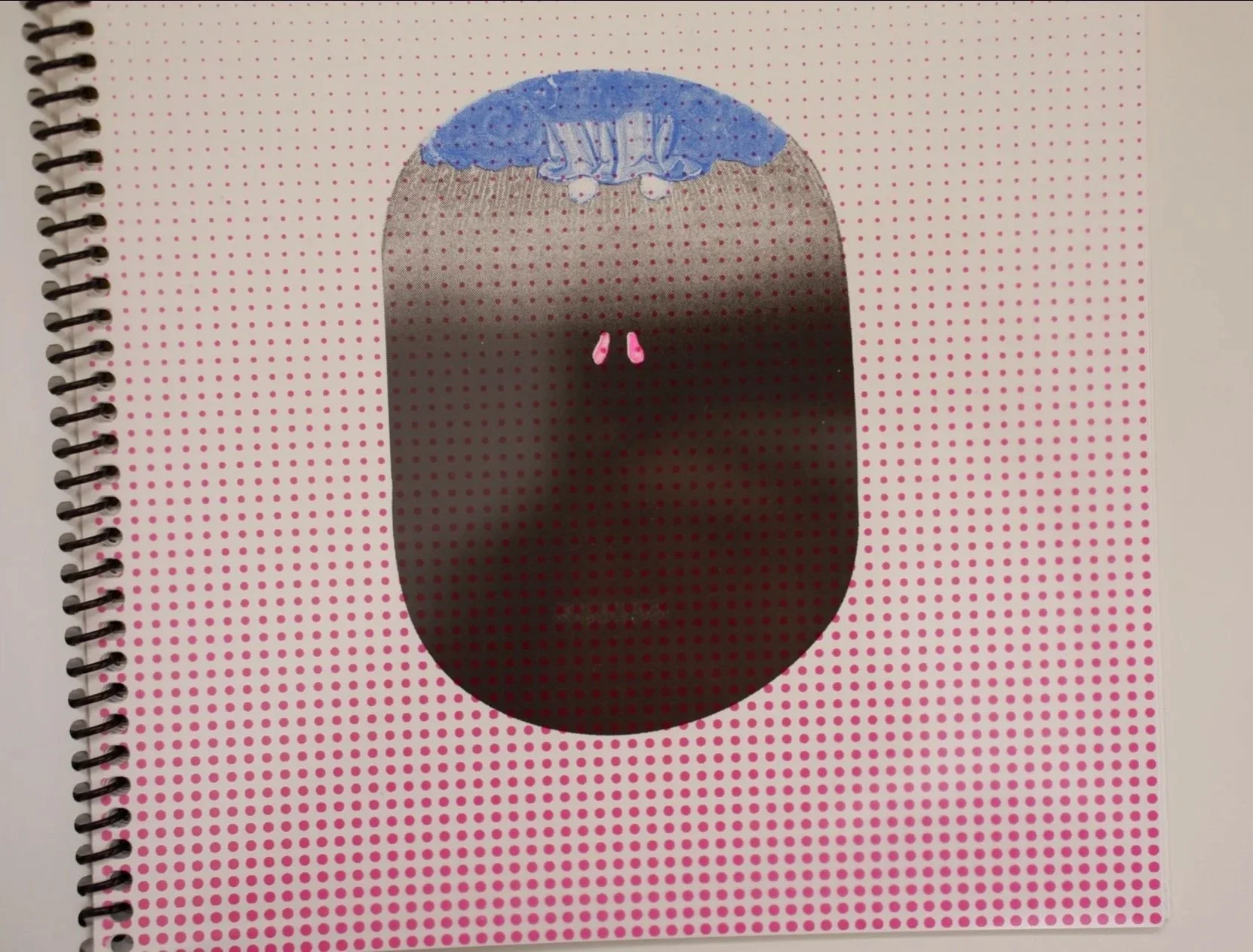
From Foot Work by Janelle Rebel in the Joan Flasch Collection
Supported by the Coachhouse1 residency and a publishing advance from Empty Field Press, I completed the first draft of my novel with two alternating titles (following the title pages of early modern English printed titles that often offered two options or translations to their readers), The English Teacher or Stacie: A Novel.
In this work, I draw from the writers who have inspired me most, including Margery Kempe and Virginia Woolf, in order to write a non-chronological account of a woman and her lifelong relationships. Told through very brief vignettes or micro-chapters, the book has been described as a novel-in-fragments-of-observation. By the time I complete this work, I hope it will become a life made out of people and texts encountered and described, presented in the form of an indexed library of interactions. It will contain many instances of found texts and fresh-sounding voices of others interspersed with my own.
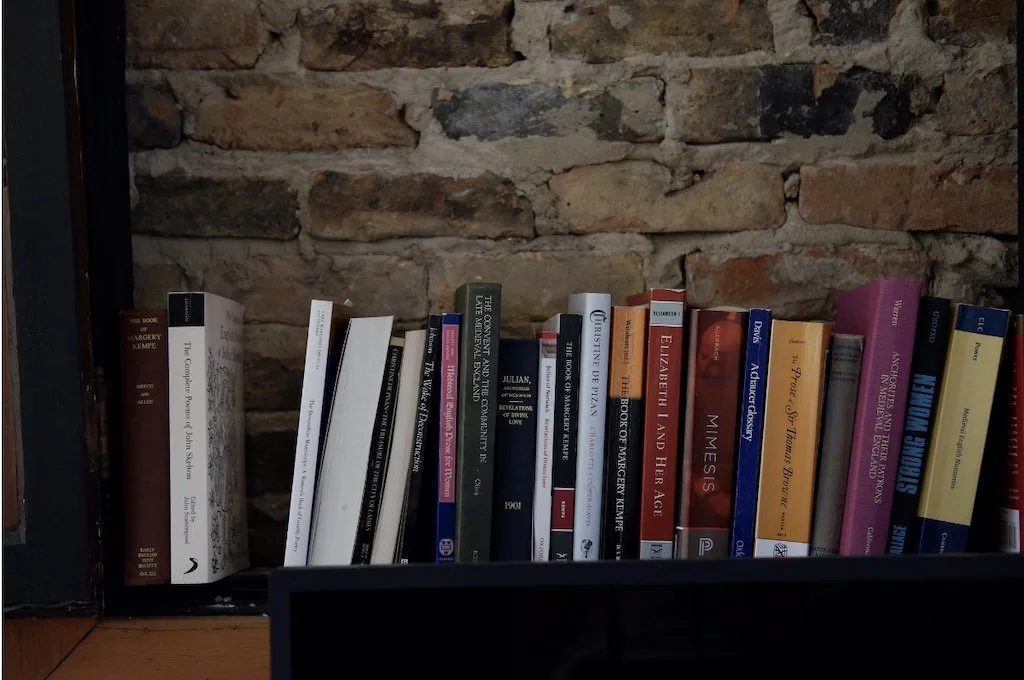
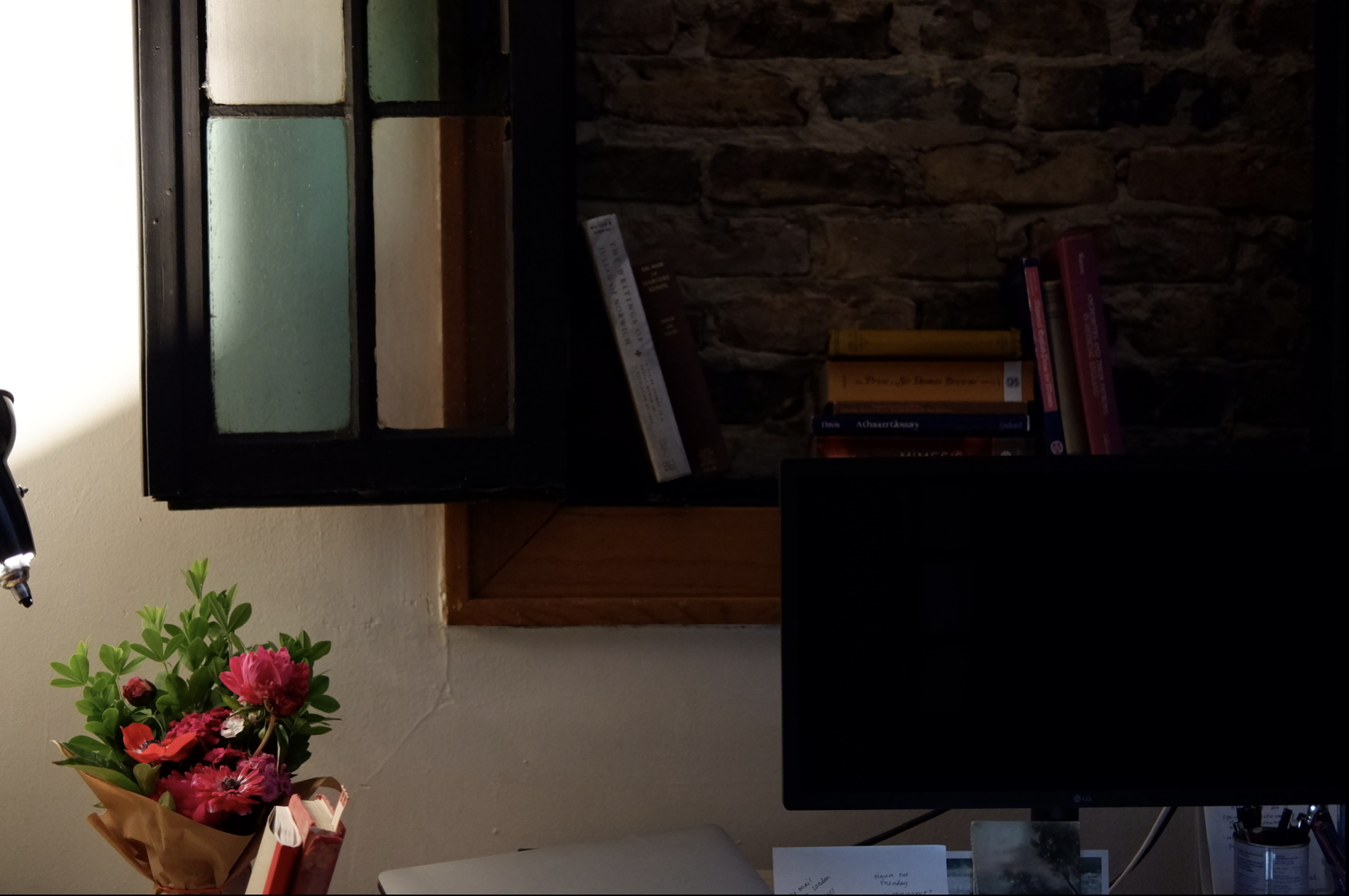
Coachhouse bookshelf
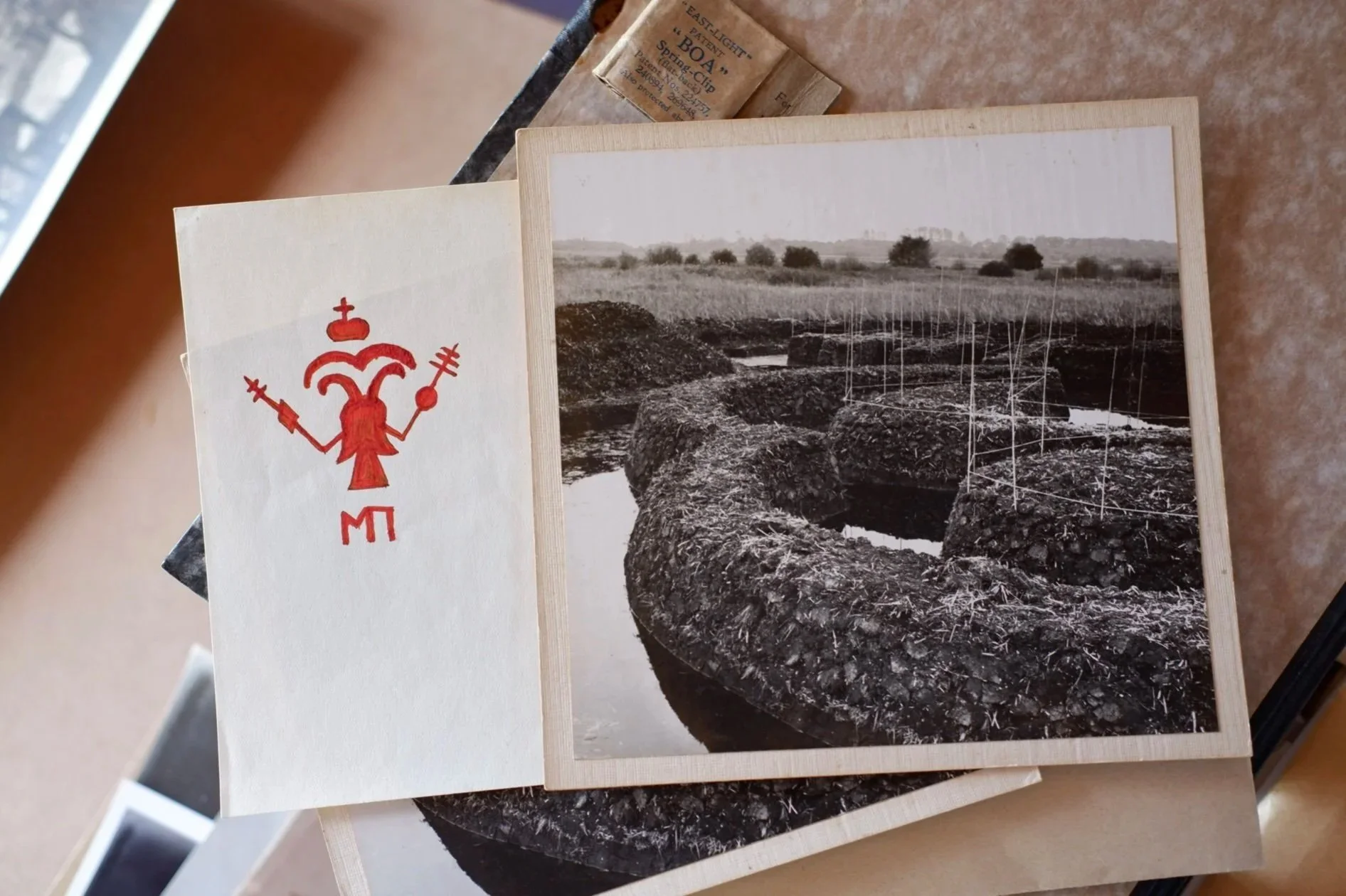
Image from the Pallis/Vlasto Archive in the Norfolk Broads, where Hope Emily Allen and her fellow medievalists Marietta Pallis and Joan Wake frequently stayed when they were not in London, from
my personal visit in April of 2026
While writing this work in the coachhouse, I continued drafting my scholarly monograph provisionally entitled Uneducated Daughters: Reading Margery Kempe in the Age of Virginia Woolf, which explores communities of women writers from late medieval England and from the early 20th century, when the manuscript of Margery Kempe’s Book resurfaced after 500 years of incidental enclosure in a household cabinet.
My work on this book has involved teaching courses through Enclosure Academy, one of which (Bookwomen) I taught from the coachhouse. It has also inspired visits to various archives since 2022, when I first started reading the papers of Hope Emily Allen at the Bodleian Library in Oxford. While in this historic home in Chicago, I was able to begin exploring unique archives such as the papers of Chaucerian editor and fiction writer Edith Rickert at the University of Chicago, and the artist books held in the Joan Flasch collection at SAIC. Both of these archives have become essential resources to me as I explore the modern medievalism of Woolf and her contemporaries.
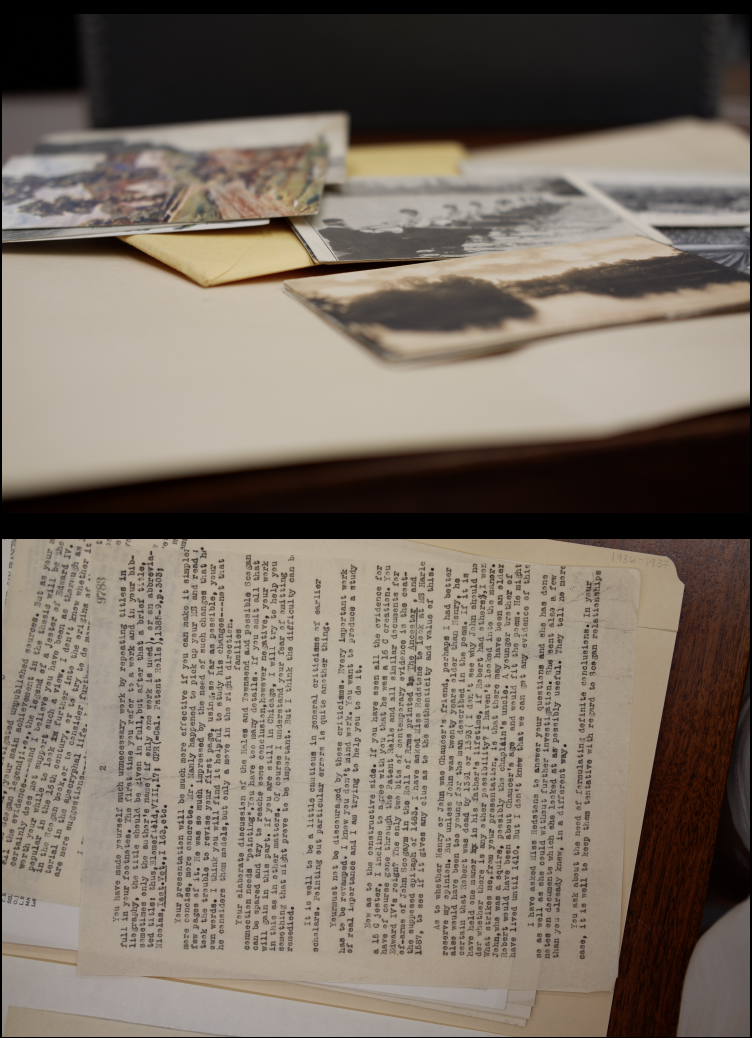
Two from the Edith Rickert Papers
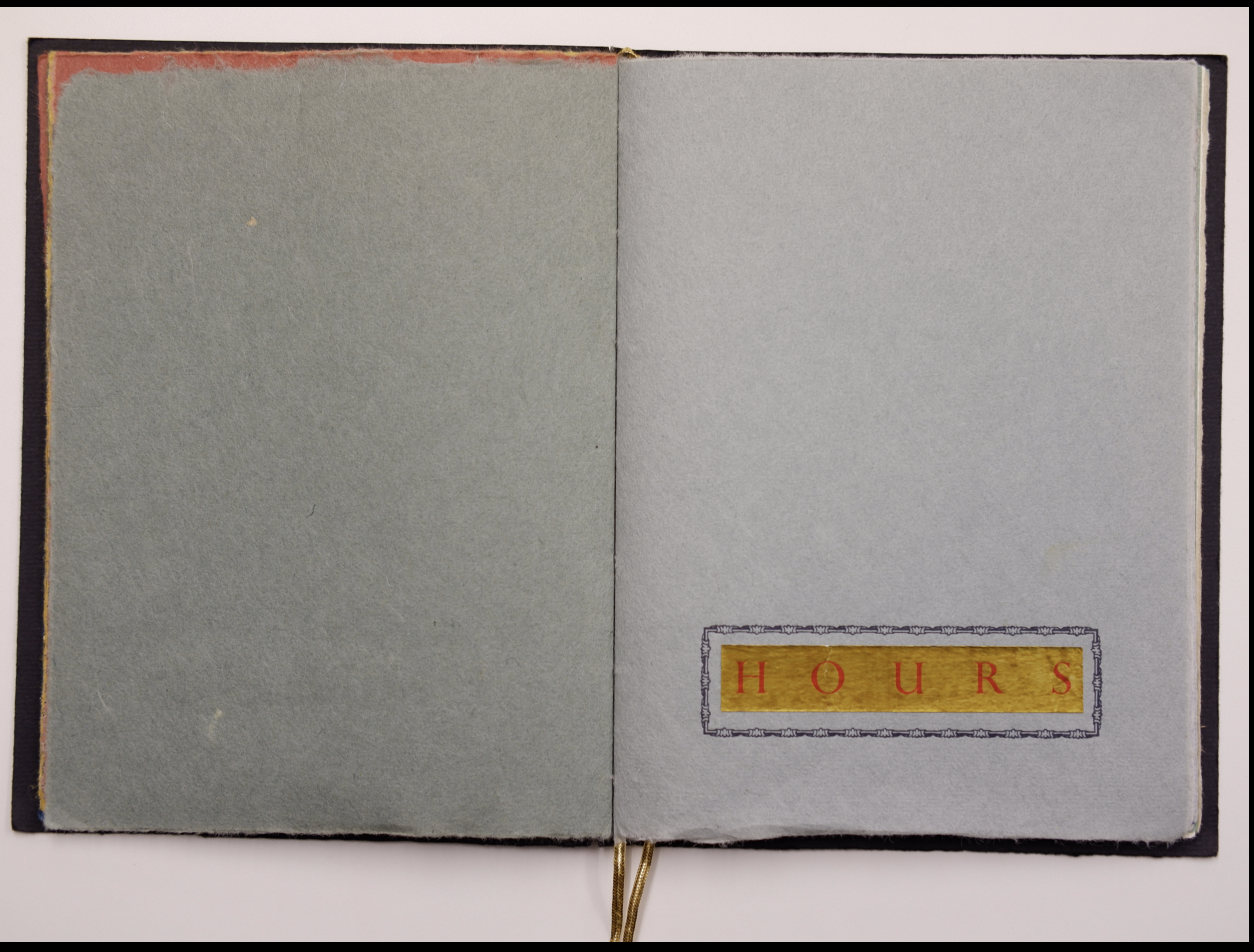
From A Book of Hours
Poems by Charles Alexander
Illustrations by Penny McElroy
Joan Flasch collection
At the core of all of this work is the question of how place and space contribute to the creation of ideas that get recorded in the book. This Coachhouse residency was for me a return to my home region, the Midwest of America. It allowed me to consider my own site of origin as well as the continued search for deeper, longer roots like those sought by medieval religious women and their modern readers.
The past is never fully accessible to us; so it is always, in part, our own creation.
June, 2026